
Hands-on comparison
Namelix vs Shopify: Business Name Test
I used one narrow naming brief for privacy-first meeting notes and checked how each generator handles constraints before showing names.
Namelix vs Shopify: the tested verdict
The brief asked for a short, trustworthy, pronounceable name for privacy-first meeting notes used by small law firms, while avoiding “legal” and “AI.”
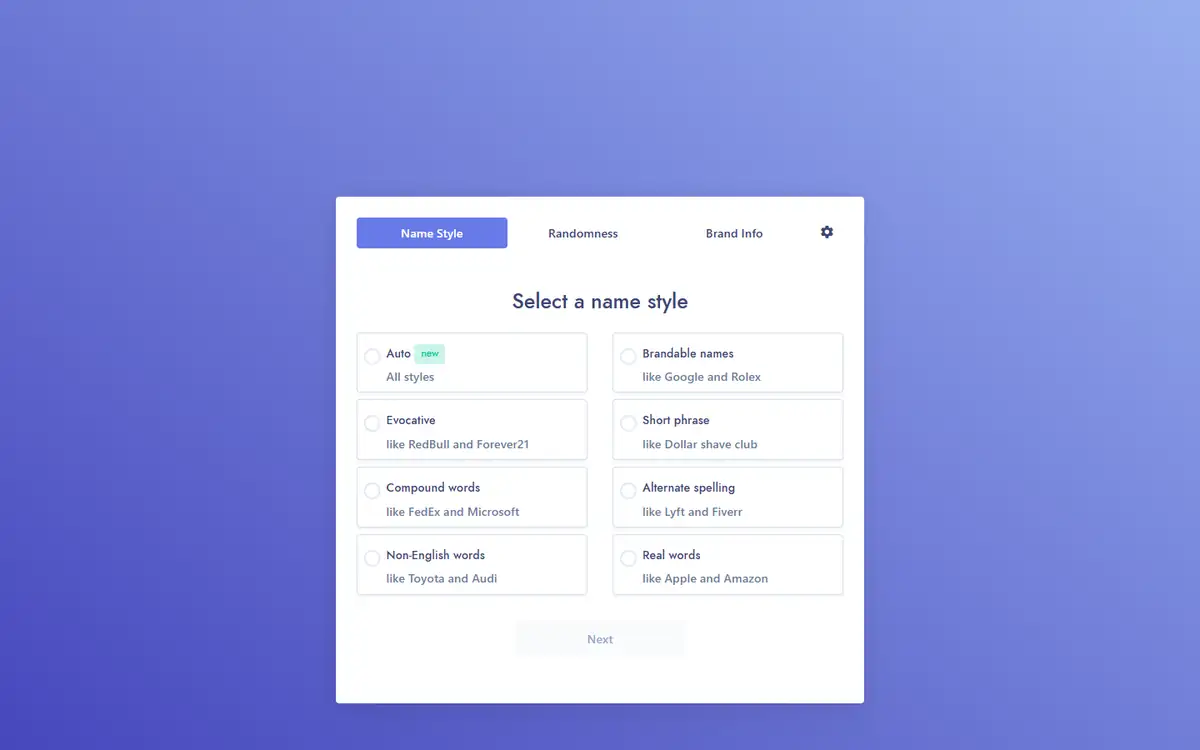
Namelix reached a wizard with Auto, brandable, evocative, phrase, compound, alternate spelling, non-English, and real-word choices. Shopify’s prompt accepted the brief but did not complete the anonymous submission.
It gave more pre-generation control, though the final name list was not scored.
Namelix is the better ideation interface; neither tool earned a final-name recommendation without trademark and domain checks.
How I tested Namelix vs Shopify
I ran this comparison on July 28, 2026 in a clean, logged-out Chrome session at 1440 by 1050 pixels. Both tools received the same input, and I timed the usable result rather than the first animation or loading state.
The brief included audience, product, desired tone, pronunciation, and two banned words. This tests constraint handling better than one generic keyword.
- Enter the same business concept into each generator.
- Check whether constraints fit before generation.
- Record style, randomness, and domain-oriented controls.
- Reject any name that implies legal advice or AI branding.
I did not count the number of names as quality. Ten relevant candidates beat one hundred generic combinations.
Namelix vs Shopify test results
| Test area | Namelix | Shopify | Decision impact |
|---|---|---|---|
| Brief length and detail | Keyword-led wizard | 120-character prompt | Shopify is simpler; Namelix is more structured. |
| Style control | Eight visible styles | Not visible before submit | Namelix supports deliberate name shapes. |
| Randomness control | Low, medium, high | Not visible | Namelix offers useful breadth control. |
| Final name list | Not scored | Not reached | No brand winner was declared. |
Namelix’s controls help prevent a common failure: mixing invented words, phrases, and literal names in one noisy list.
Shopify’s shorter path can be useful for fast ideation, but a failed submission leaves the buyer with no evidence beyond the prompt design.
Namelix test: strengths and tradeoffs
Namelix asked what kind of name to generate and how random the output should be.
Those choices make a second round more intentional because the user can change one variable at a time.
Where Namelix did well
- Strong style controls
- Randomness setting
- Useful separation of naming strategies
Where Namelix fell short
- More steps before ideas
- Final list not scored in this run
- Generated availability still needs verification
Namelix fits founders who can define what a good name sounds like before browsing.
Shopify test: strengths and tradeoffs
Shopify framed the task as a plain-language description and kept the interface approachable.
The anonymous submission stalled, so I cannot claim anything about the relevance of its generated names.
Where Shopify did well
- Simple prompt
- Clear small-business context
- Direct connection to domain and store actions
Where Shopify fell short
- Submission did not complete
- Fewer visible pre-generation controls
- Commercial funnel can distract from naming
Shopify is a fast starting point when it works, not a naming due-diligence tool.
Namelix vs Shopify quality: what changed the outcome
A naming generator should be judged on relevance, pronunciation, memorability, unwanted meanings, and legal risk.
Founders often reward novelty and ignore whether someone can spell the name after hearing it once.
- Use the exact same input and settings for both tools.
- Score task completion before judging polish.
- Count manual fixes, blocked steps, and failed exports.
- Repeat one edge case instead of trusting a single ideal sample.
Run a five-person recall test and ask each person to type the name from audio.
Namelix vs Shopify pricing and free access
I checked the public entry points and pricing language during the test. I did not treat a prominent free label as proof that the complete workflow was free.
The useful unit is a finished task: an export, an answer set, or a file that can be used outside the editor. A free preview that stops before that point has limited buying value.
| Buying question | Namelix | Shopify |
|---|---|---|
| Can the test start without an account? | See tested result | See tested result |
| Can a usable result be exported? | Verify at the final step | Verify at the final step |
| Are limits based on files, words, or credits? | Check live plan | Check live plan |
| Does the plan renew automatically? | Check checkout | Check checkout |
I would run one representative job before subscribing, then divide the monthly price by the number of outputs that actually pass review. That number is more honest than a per-credit headline.
Namelix vs Shopify privacy and data handling
The test material was synthetic or already public. I did not upload client records, private drafts, identity documents, or unreleased media.
For production use, the practical questions are retention, model-training use, deletion controls, subprocessors, and whether a team plan changes those terms.
- Use a disposable sample before sending confidential material.
- Remove names, account numbers, hidden metadata, and tracked changes.
- Confirm whether deleting a project also deletes source files and generated derivatives.
- Record the policy version used for a regulated workflow.
A polished result does not reduce the sensitivity of the source. If the input would be risky in an ordinary support ticket, it is risky in an AI tool too.
Recheck the official Namelix page and the official Shopify page before uploading confidential material or paying. Product limits and policy language can change after this test date.
Who should use Namelix or Shopify?
Namelix is best for
- Founders who want controlled ideation
- Brand strategists comparing name structures
- Teams narrowing a clear naming brief
Shopify is best for
- Merchants starting a Shopify store
- Users who want a short prompt
- Founders moving quickly from name to domain
Who should use neither tool
- Teams that need a signed data-processing agreement before any test.
- Users who cannot independently verify the output.
- Workflows where a missed fact, altered edge, or false label creates legal or safety risk.
Regulated companies and funded startups should involve trademark counsel before adoption.
Namelix vs Shopify: final buying decision
Namelix wins the interface-control test.
A final brand decision remains open because neither tested path produced a fully vetted candidate list.
- Choose the tool that completes your real task with fewer corrections.
- Treat sign-in walls, CAPTCHAs, and export limits as part of the product.
- Keep a manual verification step for high-impact work.
- Retest after a major model, editor, or pricing update.
Use Namelix to generate within one style, shortlist five pronounceable names, then run trademark, domain, search, and recall checks.
For more hands-on comparisons, visit the AI tool comparisons hub.
Namelix vs Shopify FAQ
Is Namelix better than Shopify for business names?
Namelix offered more style and randomness controls in this test. Shopify’s submission did not reach a result.
Are generated names safe to use?
No. Check trademarks, company names, domains, search results, and unintended meanings.
What makes a good naming prompt?
Include the audience, product, desired tone, pronunciation preference, and words to avoid.
Next step
Write a five-line naming brief, generate one style at a time, and reject every candidate that fails spelling or trademark checks.