
Upscale.media vs ImgUpscaler: Photo Test
Upscale.media vs ImgUpscaler: the tested verdict
The source was deliberately degraded from a 1536-pixel product image to a 256-pixel JPEG with reduced sharpness.
Both uploads were accepted. The pages then moved away from a clear comparison state, so I refused to infer quality from marketing claims or page copy.
The result state was not captured reliably enough to score invented detail or edge quality.
Retest both manually before choosing; an upscaler is only proven when the downloaded file beats ordinary resizing without inventing defects.
How I tested Upscale.media vs ImgUpscaler
I ran this comparison on July 28, 2026 in a clean, logged-out Chrome session at 1440 by 1050 pixels. Both tools received the same input, and I timed the usable result rather than the first animation or loading state.
The bottle image contained fine table grain, a matte texture, a metal ring, a handle opening, and a blurred plant background.
- Upload the same 256 by 256 JPEG.
- Request the default enhancement or upscale.
- Download the processed file if available.
- Compare dimensions, edge halos, texture, and fabricated detail against the original.
The 1536-pixel source served as a reference, not as an input to either upscaler.
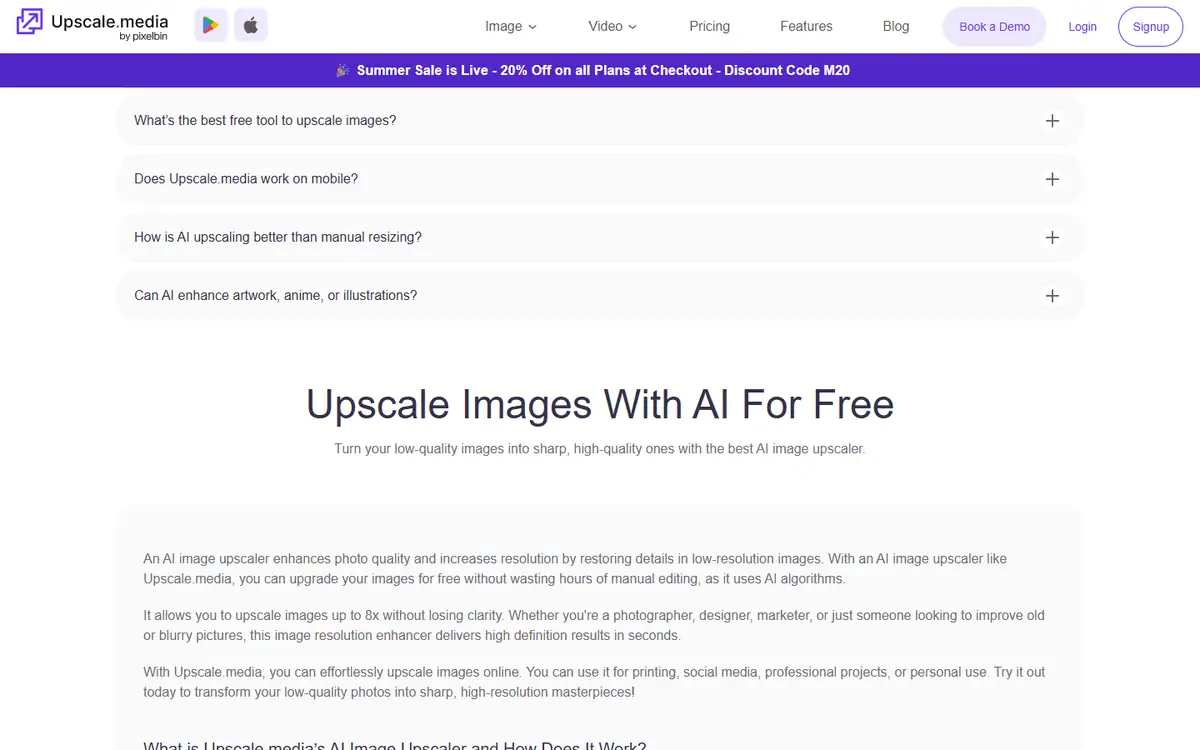
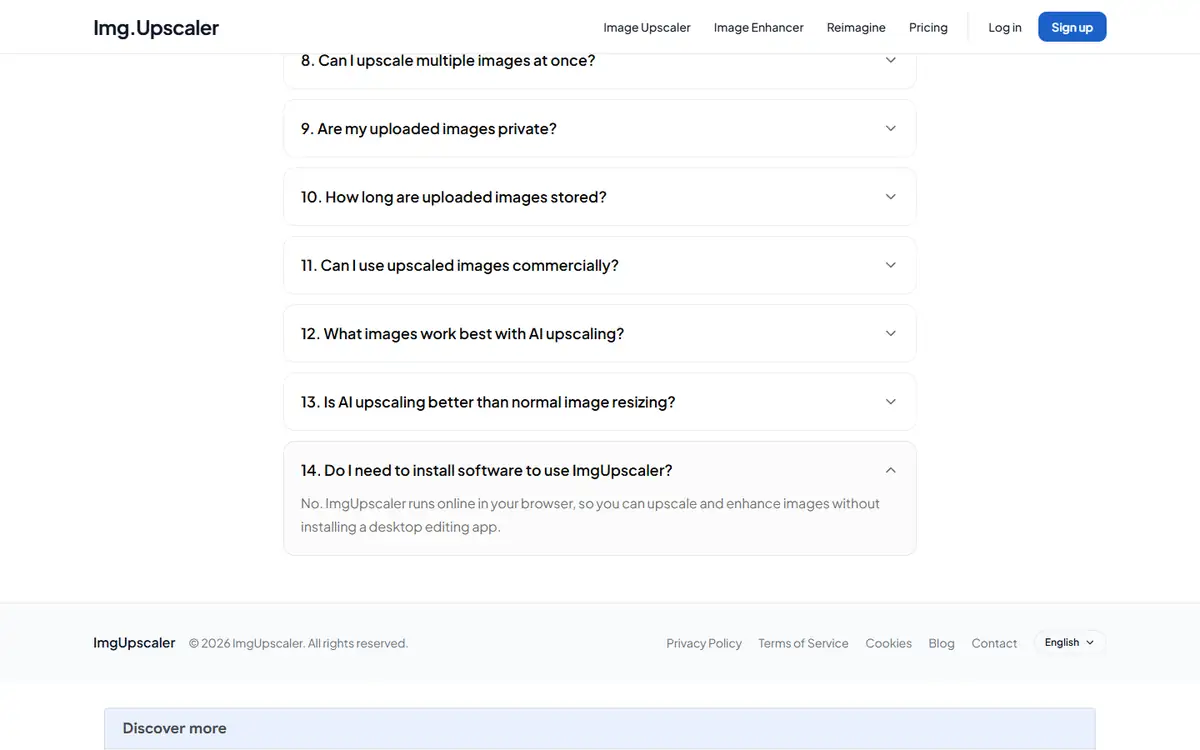
Upscale.media vs ImgUpscaler test results
| Test area | Upscale.media | ImgUpscaler | Decision impact |
|---|---|---|---|
| 256px JPEG accepted | Yes | Yes | Both passed the input step. |
| Clear before/after view | Not captured | Not captured | Quality could not be compared honestly. |
| Download dimensions | Not verified | Not verified | Marketing scale claims were ignored. |
| Winner on image quality | Not scored | Not scored | A manual rerun is required. |
This is a useful negative result. AI upscaler reviews often quote maximum scale and never verify the exported pixels.
Without the files, there is no basis to claim that either tool restored table grain, preserved the bottle edge, or avoided ringing.
Upscale.media test: strengths and tradeoffs
Upscale.media presented a polished upload flow and product information for image and video enhancement.
The captured browser state did not preserve a before-and-after artifact for inspection.
Where Upscale.media did well
- Accepted the small JPEG
- Clear image-upscale positioning
- Mobile app links visible
Where Upscale.media fell short
- No auditable output captured
- Download size not verified
- Quality claims remain untested
Upscale.media stays on the shortlist only after a manual export check.
ImgUpscaler test: strengths and tradeoffs
ImgUpscaler also accepted the file and offered a focused standalone upscaler page.
Its captured state ended in supporting content rather than a clear processed image.
Where ImgUpscaler did well
- Simple upload entry
- Focused upscaler product
- Public privacy questions visible
Where ImgUpscaler fell short
- No auditable output captured
- Dimensions not verified
- Page state obscured task completion
ImgUpscaler needs the same manual-download test before any quality verdict.
Upscale.media vs ImgUpscaler quality: what changed the outcome
Upscaler quality should be measured against ordinary Lanczos resizing and, when possible, a known high-resolution original.
Inspect high-contrast edges, small text, skin, repeated patterns, and smooth gradients at 100%.
- Use the exact same input and settings for both tools.
- Score task completion before judging polish.
- Count manual fixes, blocked steps, and failed exports.
- Repeat one edge case instead of trusting a single ideal sample.
A sharper preview at fit-to-screen scale can hide halos and fabricated texture.
Upscale.media vs ImgUpscaler pricing and free access
I checked the public entry points and pricing language during the test. I did not treat a prominent free label as proof that the complete workflow was free.
The useful unit is a finished task: an export, an answer set, or a file that can be used outside the editor. A free preview that stops before that point has limited buying value.
| Buying question | Upscale.media | ImgUpscaler |
|---|---|---|
| Can the test start without an account? | See tested result | See tested result |
| Can a usable result be exported? | Verify at the final step | Verify at the final step |
| Are limits based on files, words, or credits? | Check live plan | Check live plan |
| Does the plan renew automatically? | Check checkout | Check checkout |
I would run one representative job before subscribing, then divide the monthly price by the number of outputs that actually pass review. That number is more honest than a per-credit headline.
Upscale.media vs ImgUpscaler privacy and data handling
The test material was synthetic or already public. I did not upload client records, private drafts, identity documents, or unreleased media.
For production use, the practical questions are retention, model-training use, deletion controls, subprocessors, and whether a team plan changes those terms.
- Use a disposable sample before sending confidential material.
- Remove names, account numbers, hidden metadata, and tracked changes.
- Confirm whether deleting a project also deletes source files and generated derivatives.
- Record the policy version used for a regulated workflow.
A polished result does not reduce the sensitivity of the source. If the input would be risky in an ordinary support ticket, it is risky in an AI tool too.
Recheck the official Upscale.media page and the official ImgUpscaler page before uploading confidential material or paying. Product limits and policy language can change after this test date.
Who should use Upscale.media or ImgUpscaler?
Upscale.media is best for
- Mobile users testing quick enlargements
- Marketers with non-critical web images
- Teams willing to compare downloaded pixels
ImgUpscaler is best for
- Users who want a focused browser upscaler
- Creators testing small batches
- People who can verify output dimensions
Who should use neither tool
- Teams that need a signed data-processing agreement before any test.
- Users who cannot independently verify the output.
- Workflows where a missed fact, altered edge, or false label creates legal or safety risk.
Neither tool should be used to reconstruct evidence, identification images, or medical details.
Upscale.media vs ImgUpscaler: final buying decision
No winner is declared because neither result was captured in a form that could be audited.
That restraint is more useful than guessing from a smooth preview.
- Choose the tool that completes your real task with fewer corrections.
- Treat sign-in walls, CAPTCHAs, and export limits as part of the product.
- Keep a manual verification step for high-impact work.
- Retest after a major model, editor, or pricing update.
Run the downscale-and-recover test manually, compare both downloads with ordinary resizing, and choose the one with fewer halos and invented textures.
For more hands-on comparisons, visit the AI tool comparisons hub.
Upscale.media vs ImgUpscaler FAQ
Which is better, Upscale.media or ImgUpscaler?
This test did not capture auditable output files, so no image-quality winner was declared.
Can AI upscalers restore real detail?
They can create plausible detail, but it may not match the original scene.
How should I test an upscaler?
Downscale a known high-resolution image, process it, and compare the download with both the original and ordinary resizing.
Next step
Use a known original, save both downloads, and compare edges and texture at 100% before paying for credits.